

SLOGBAA Fellowship training for 30 people

From the 15th to the 20th of April 2024 the SLOGBAA fellowship training was carried held across the tree districts as part of the SLOGBAA II project. The 6-day intensive SLOGBAA training equipped selected youth council leaders with essential knowledge and skills in understanding evidence-based budget advocacy and transformational leadership, aimed at enhancing their ability to engage with local government and identify entry points for meaningful participation in democratic processes across Yumbe, Mayuge, and Kampala Districts. A total of 30 youth leaders (11 female and 19 male) participated, 10 from Yumbe (4F, 6M), 10 from Kampala (3F, 7M), and 10 from Mayuge (4F, 6M).
The SLOGBAA Curriculum comprises
Module 1: Introduction to Local Governance. This module provided participants with entry-level knowledge of national and local government structures and the policy framework that gives them the mandate to exist. For example, they were able to understand key terms such as decentralization, the Local Government Act, and some key elements. Much as this may sound like general knowledge, it's not common among the local youth, who are the majority and have not had formal education or civic education.
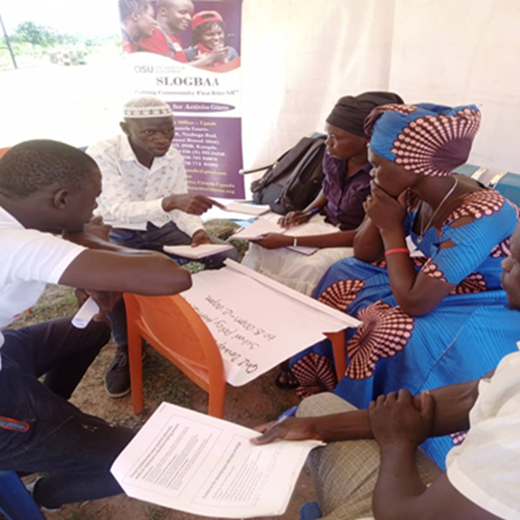 Module 2 - Budget Advocacy: Under this training, participants were able to understand the entry-level of a budget development cycle. In simple terms, how does money from the central government flow to the district and get spent each year? In addition, they were able to understand how a district plans for its community needs, who decides what to budget and how the community come into the planning processes. Through this, they were able to understand the three layers of the budget, therefore (i) Budget preparations -August-November, (ii) Budget Approval May-December, and February-April (iii) Budget Execution M& E and Audit-June-July.
Module 3 Accountability: Under this module, participants were encouraged to understand that it is their right to demand better service from both technocrats and political structures. “Technocrats, not political structures, allocate funds; however, they have a voice in deciding where resources should go”, which is why local youth need to engage with both.
Post-training assessments indicate that over 89% of the youth leaders demonstrated significant improvement in their understanding and application of these core competencies, positioning them to contribute more effectively to governance and decision-making in their communities.