

How Uganda's Youth Are Orchestrating Their Future Through the National Youth Manifesto
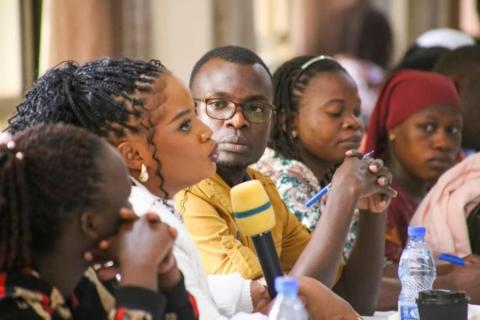
Uganda is a nation of youth. With 45.9 million people and a staggering 2.9% annual growth rate, the country's energy is young, ambitious, and undeniable. The latest census reveals that 22.7% of the population over 10 million strong are aged 18-30. This is not just a demographic statistic; it is a seismic force, currently channelled into three main arteries: the bustling "Jua Kali" (informal sector), the vibrant Civil Society Sector, Students and the Youth in Politics (through National Youth structures).
They are the engine of the nation, yet for decades, their collective power has been like a music band without a conductor. Despite a policy framework designed to organize and amplify their voice—the National Youth Council Act, Students' Guild Council and the NGO Act—their potential has remained a promise, not a reality. Systemic structures have often failed to harmonize this immense talent and drive into national progress.
But a more empowered movement is building. A powerful, collective score is being written, one that aims to finally syncopate the rhythm of youth aspiration with the beat of national development. This is the 2026-2031 National Youth Manifesto (NYM).
More Than a Document: A Social Contract for the Future
The NYM is not merely another policy paper. It is a social contract. A binding pact between the youth of Uganda, their civil society champions, and the Government of Uganda. For over a decade, through successive cycles, it has been the definitive platform where young Ugandans articulate their non-negotiable priorities: employment, health, education, creative arts, and a rightful seat at the decision-making table.
Now, as we look toward 2026, this beacon of hope is being reignited with sharper focus and greater urgency. The next cycle zeroes in on six transformative pillars:
- Human Capital Development – Investing in the mind and skill of every young Ugandan.
- Governance and Security – Demanding accountable systems and safe communities.
- Agro-Industrialization – Transforming passion for the land into economic powerhouse industries.
- Climate Change & Natural Resource Management – Securing the future by protecting the present.
- Digital Transformation – Bridging the digital divide to connect with global opportunity.
- Integrated Transport Infrastructure – Mobilizing a generation by mobilizing the nation.
From Pages to Power: The Blueprint for Enforcement
The brilliant composition of the Manifesto means nothing if it remains sheet music in a closed book. The critical challenge—and the monumental opportunity—lies in its enforcement at the local government level. This is where promises meet pavement, where national agendas touch daily life.
Hope is not lost; it is being organized. International Actors like Civil Connection Community Foundation-CCCF in collaboration with grassrooted organizations like the Network for Active Citizens (NAC) are on the ground, interacting and engaging young voices from the Eastern (Mayuge), Central (Kampala), and Northern (Yumbe) to ensure that this policy document doesn’t remain on paper.
The vision now is to use the NYM as a cohesive framework for action, activated through innovative, collaborative approaches:
- The Green Democratic Space: Creating inclusive, safe forums for dialogue and accountability between youth and leaders.
- Community Youth Parliament: Taking parliamentary practice to the grassroots, training a new generation in the art of debate, legislation, and oversight.
- SLOGBAA Online Learning: Democratizing knowledge and equipping youth with the skills demanded by the new economy.
- The Youth Go Budget App: Demystifying public finance, enabling young people to track, analyze, and advocate for resources that serve their priorities.
The Call: It’s Time to Harmonize
The 2026-2031 National Youth Manifesto represents Uganda’s most viable blueprint for harnessing the demographic dividend. It is the conductor’s baton, waiting to unite 10 million voices into a symphony of progress. But the youth cannot perform this alone. The civil society sector must be the steadfast amplifier, providing the technical support, advocacy muscle, and sustained partnership to hold the covenant accountable. Elected leaders and government institutions must move from audience to active participants, listening to the score and resourcing its performance.
Uganda stands at a pivotal moment. We can either continue with the unstructured noise of untapped potential, or we can choose the powerful harmony of a generation organized, heard, and empowered.
The manifesto is written. The instruments are ready. The musicians—Uganda’s formidable youth—are taking the stage. It is time for the nation to listen, and to play its part.
“The future is not just young. It is organized, it is demanding, and it is ready to build.”
This article was contributed by insights from the Civil Connections Community Foundation and Network for Active Citizens, as grassroot focused organization mobilizing for an empowered and active citizenry in Uganda.